
Pandora’s Elusive Sunset Reed Revealed: Gamer’s Guide to Pristine Harvests in 2026
Gather exquisite Sunset Reed in Avatar: Frontiers of Pandora’s Upper Plains at Doula’s Stream during thunderstorms for top-tier crafting.
In the sprawling digital ecosystem of Avatar: Frontiers of Pandora, few materials hold as much sway over the crafting meta as the Sunset Reed. As the game enters its third year since launch, a dedicated community of gatherers continues to chart the Upper Plains, their Na'vi senses tuned to the precise rhythm of the crimson trees. What was once a bewildering hunt for high-tier weapon components has now crystallised into something resembling a desert bloom hunt—ephemeral, demanding, and deeply rewarding. The Sunset Reed, a crimson-tipped flora that thrives in the shallows of the Mother of Rivers domain, has become the centrepiece of a player-driven pilgrimage, with entire squads timing their expeditions to coincide with the thunderstorms that awaken its full potential.
Unlike common reed varieties scattered across the Plains, superior and exquisite specimens of Sunset Reed refuse to reveal themselves without a forensic-level understanding of biomes. According to veteran foragers who have spent hundreds of hours mapping the region, the sweet spot lies not in the sprawling waters of the wider map, but in the intimate embrace of Doula’s Stream and Daughter’s Pool. These twin water bodies, tucked roughly 1.5 kilometres northwest of The Circle hub, have earned a near-mythical status among crafters—akin to the legendary singer’s grottoes where the best pearls have always been found. Accessing them requires a trek past the Archipelago Field Lab, a journey that, in 2026, is often undertaken in cooperative parties coordinating through community-run weather-watch channels on external platforms.
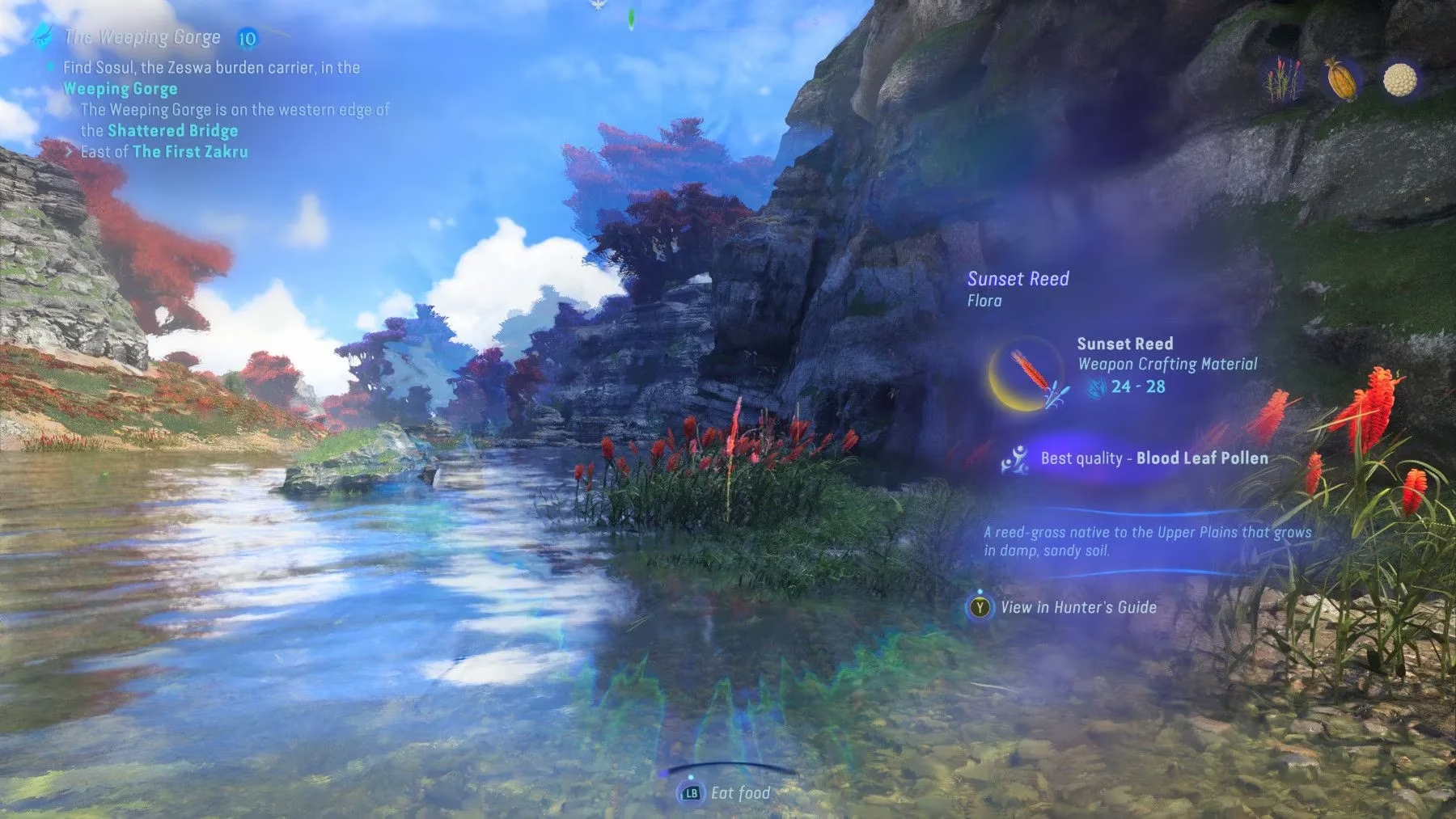
The real alchemy, however, begins once a player stands knee-deep in the bioluminescent shallows. Spotting a Sunset Reed is merely the overture; distinguishing the extraordinary from the merely ordinary demands the scrutiny of an art critic examining a canvas for subtle brushstrokes. The Hunter’s Guide, pinned to the HUD, makes the reeds glow yellow when Na’vi senses are activated, a function that now feels as natural to seasoned players as checking a wristwatch. Yet it’s the ‘inspect’ feature that separates the casual gatherer from the connoisseur. By carefully circling each bunch of reeds and examining their colour saturation and height, players can isolate the 0.5% spawns that carry the ‘exquisite’ tag. This process has been described by one streamer as “trying to catch a snowflake on your tongue during a blizzard—you know it’s there, but the conditions have to be perfect.”
The metaphor holds particularly true when one factors in the elusive Blood Leaf Pollen bonus. According to the Guide, Sunset Reed achieves its absolute pristine state only when pollen from the nearby crimson trees is blown onto the reeds. This requires a thunderstorm or hurricane—weather patterns that, in the game’s dynamic simulation, are as unpredictable as a solar eclipse. Dedicated foragers have turned this into a ritual: they camp at the fire pit just north of Daughter’s Pool, at the Archipelago Field Lab, and repeatedly pass time until the tell-tale roar of thunder rolls across the plains. The wind then becomes a sculptor, carrying the pollen as if it were stardust, coating the reeds in a microscopic film that transforms their stats. “It’s like waiting for the precise moment when the moon lines up with the sun,” remarked a player on the r/AvatarFrontiers subreddit. “You can’t force it; you can only be ready.”
This intricate dance between geography, meteorology, and patience has spawned a subculture of ‘Reed Runners’—players who specialise in collecting and trading top-tier Sunset Reeds within clan inventories. In 2026, the in-game economy has stabilised to the point where a single exquisite, pristine-harvested Sunset Reed can fetch rare mods or even pledged cooperation for complex ancestral skill quests. The Mother of Rivers domain has thus become a social hub, with players often setting up temporary camps along Doula’s Stream, sharing tips on the exact angle of the harvesting strike that triggers the clean-cut bonus. The sound of a perfectly extracted reed—a crisp, resonant snap—has become a badge of honour.
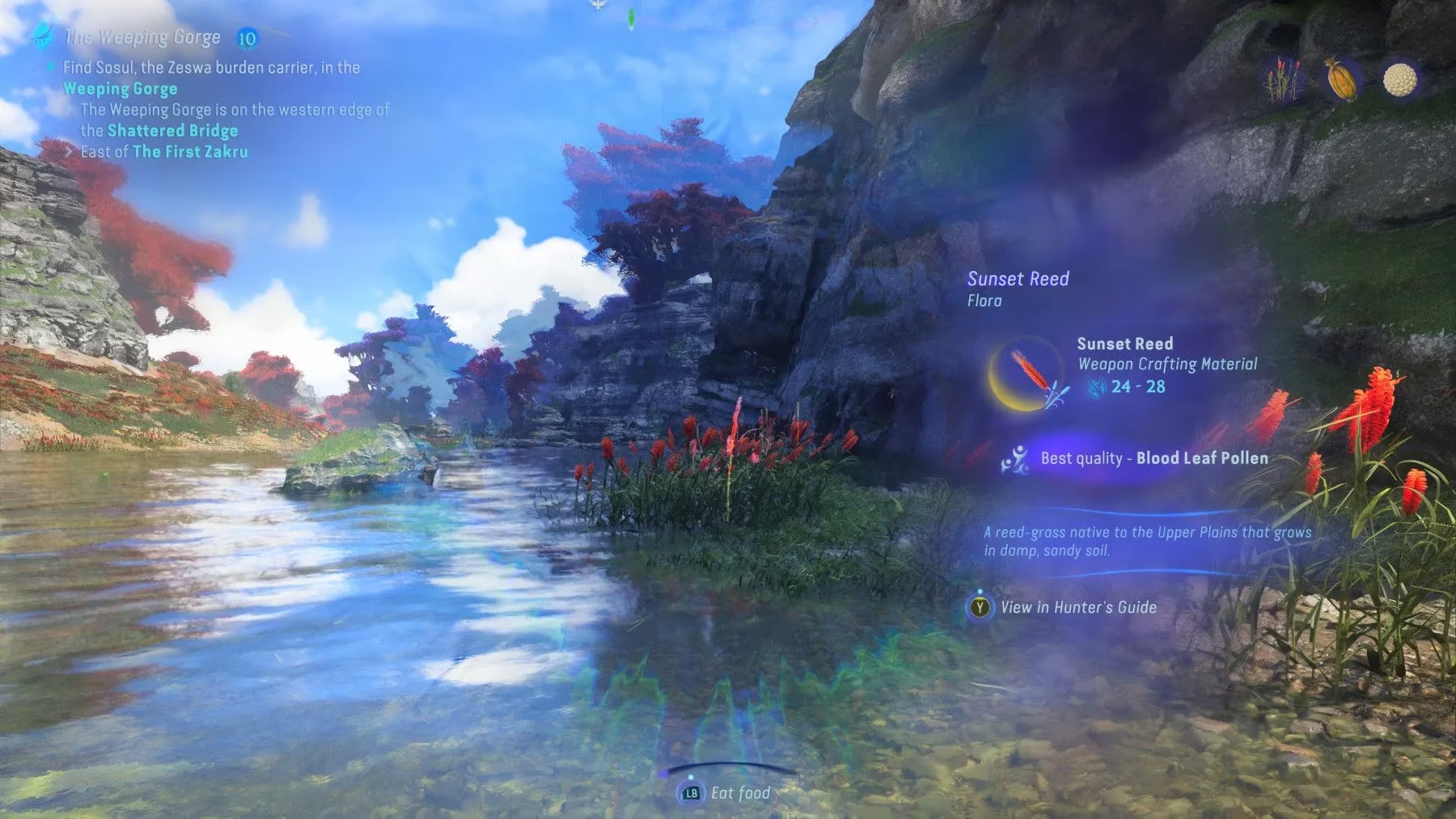
For those still struggling to locate the prime spots, the community-maintained interactive maps have become indispensable. The northern banks of Daughter’s Pool, where the water laps against the roots of the crimson trees, consistently yield exquisite reeds if the storm conditions are met. Meanwhile, the meandering path of Doula’s Stream offers more frequent but lower-quality harvests, making it an ideal training ground. The journey itself—navigating past the thundering Sturmbeest herds that now roam in larger packs after a 2025 fauna update—adds a layer of risk that turns each expedition into a miniature adventure. As one player put it, “You’re not just picking flowers; you’re threading a needle through a living, breathing world.”
In a broader sense, the pursuit of the Sunset Reed mirrors the game’s philosophy of interconnectedness. It’s not simply a resource; it’s the culmination of environmental awareness, precise timing, and a willingness to let the virtual climate guide one’s actions. Long-time players say that the first time they held a pristine exquisite Reed, with its fibres shimmering like compressed sunsets, they understood why the Na’vi speak of the land as a network of energy. The material has become a symbol—a testament to the idea that in Frontiers of Pandora, the best equipment isn’t forged from brute force but from harmony. And so, as 2026 unfolds, the crimson reeds continue to sway in the shallows, waiting for the next thunderstorm and the next pair of hands steady enough to harvest them.