
Immersion-Breaking Elements in Avatar: Frontiers of Pandora
Explore the stunning yet inconsistent world of Avatar: Frontiers of Pandora, where immersion-breaking design choices challenge players. Discover how navigation frustrations and simplistic villain portrayals disrupt an otherwise captivating Na'vi adventure.
As players venture into the lush, vibrant world of Pandora's Western Frontier in Avatar: Frontiers of Pandora, they find themselves immersed in a conflict between the indigenous Na'vi and the Resource Development Administration's relentless exploitation. The game invites exploration of breathtaking biomes and unique ecosystems, yet beneath its stunning surface lie several design choices that challenge players' suspension of disbelief. While the core narrative compellingly portrays the struggle to unite clans against human invaders, certain gameplay mechanics and world-building elements create puzzling inconsistencies that occasionally disrupt the otherwise captivating experience.
Navigating Without Directions
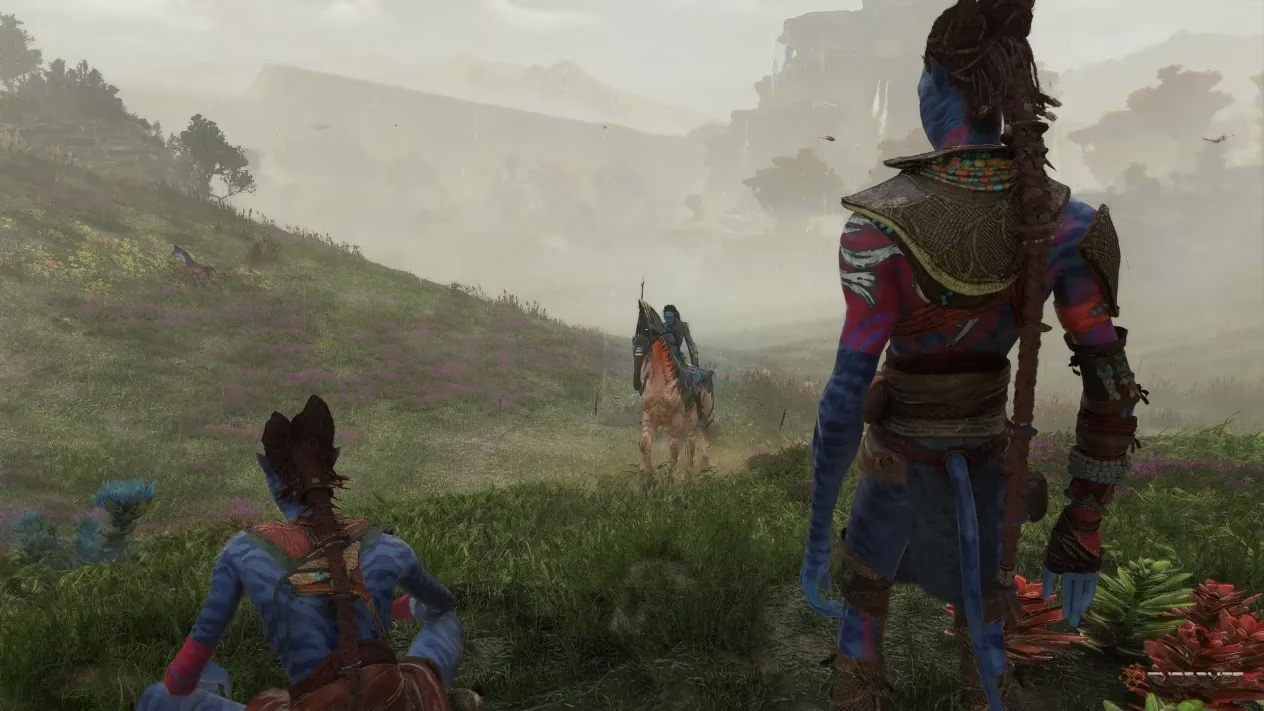
One of the most immediately noticeable oddities is the complete absence of traditional navigation systems. Players must explore the vast Western Frontier without clear directional guidance, relying instead on vague suggestions from Na'vi allies and their own observational skills. While this approach theoretically encourages environmental awareness and immersion in the Na'vi way of life, it often results in frustrating disorientation. The UI compass provides minimal assistance, and players can only set a single custom marker at any given time—a limitation that feels particularly artificial in a world where the Na'vi presumably possess sophisticated spatial awareness and environmental knowledge. This design choice, while perhaps intended to foster exploration, frequently pulls players out of the experience as they struggle with basic navigation in an otherwise technologically advanced gaming environment.
Environmental Indifference Among RDA Forces
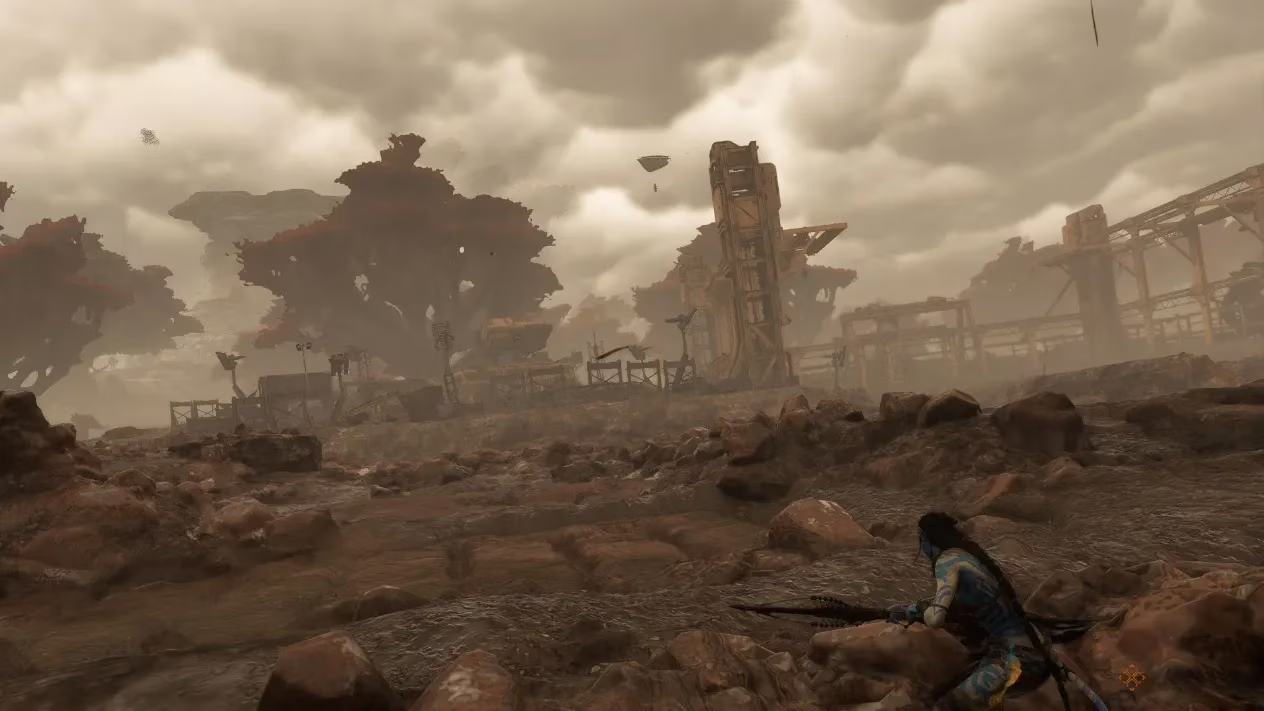
The game presents the RDA soldiers as uniformly indifferent to the environmental devastation they cause, which strains credibility. While the narrative establishes the Resistance as comprising former RDA personnel who recognized the destruction, the active-duty soldiers show no signs of discomfort or moral conflict. They move through polluted landscapes, witness the destruction of Pandora's unique ecosystems, and participate in extractive operations without any visible hesitation or commentary. This monolithic portrayal overlooks the psychological complexity that would realistically exist among human personnel stationed on an alien world, particularly one as biologically and spiritually rich as Pandora. The absence of even minor dissent or moral questioning among RDA ranks creates a simplistic villain archetype that undermines the narrative's potential for nuanced conflict.
Cosmetic Rewards for Clan Contributions
Players discover that contributing to clan donation baskets unlocks not only practical rewards but also entirely new hair colors—a mechanic that makes little cultural sense within Na'vi society. While new hairstyles might reasonably reflect cultural exchange or status achievement among different clans, the sudden availability of completely unnatural hair colors like auburn from the Zeswa clan feels disconnected from the established lore. What's particularly immersion-breaking is that these dramatic physical changes occur without any acknowledgment from other characters. A Na'vi could transform their appearance overnight, and fellow clan members would continue interacting with them as if nothing had changed. This disconnect between player customization and in-world reactions creates a jarring separation between gameplay mechanics and narrative consistency.
Instantaneous Enemy Coordination
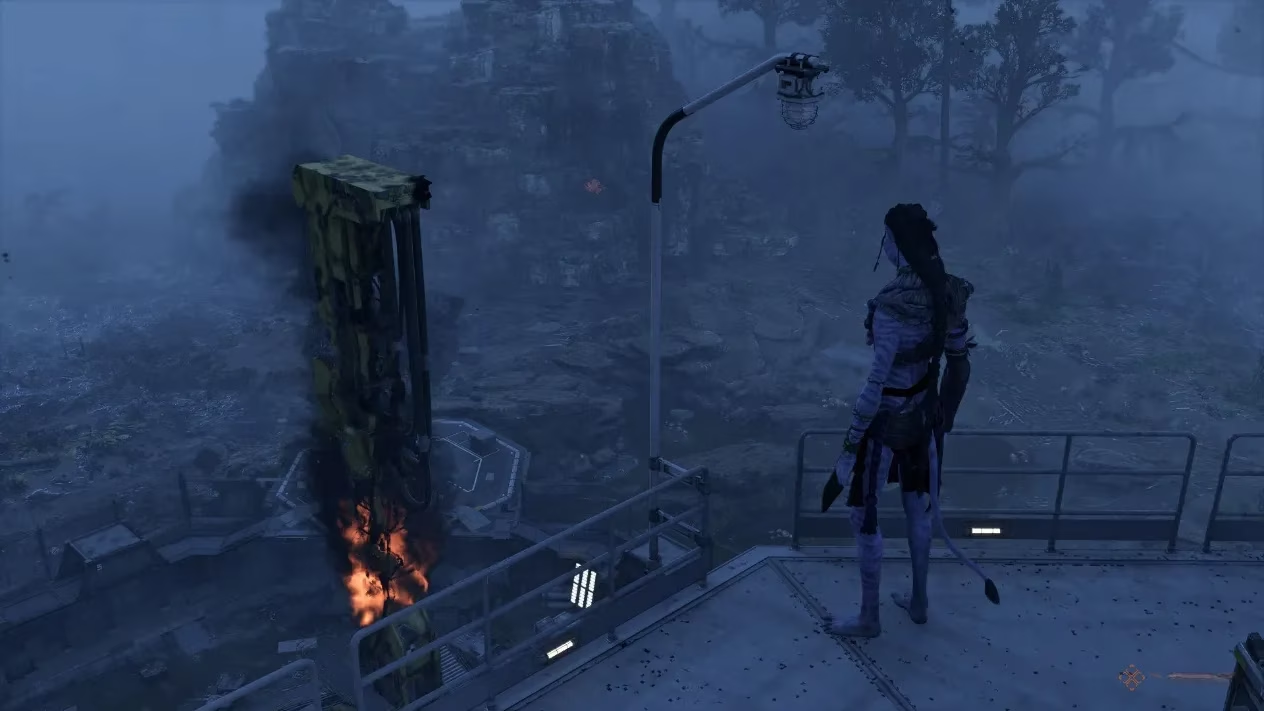
The enemy detection system presents another puzzling element: perfect coordination among RDA forces. When one soldier spots the player, suddenly every enemy in the vicinity knows the player's exact location with pinpoint accuracy. This telepathic coordination persists even when the player breaks line of sight, with enemies continuing to track movements through obstacles and terrain. Even missed arrows somehow transmit the shooter's precise position to all nearby forces. While this mechanic serves to increase gameplay challenge, it contradicts the established limitations of human technology on Pandora and creates frustrating scenarios where stealth approaches feel unrewarding. The system would benefit from more graduated detection mechanics that reflect actual communication limitations and individual enemy awareness.
Unrealistic Environmental Recovery
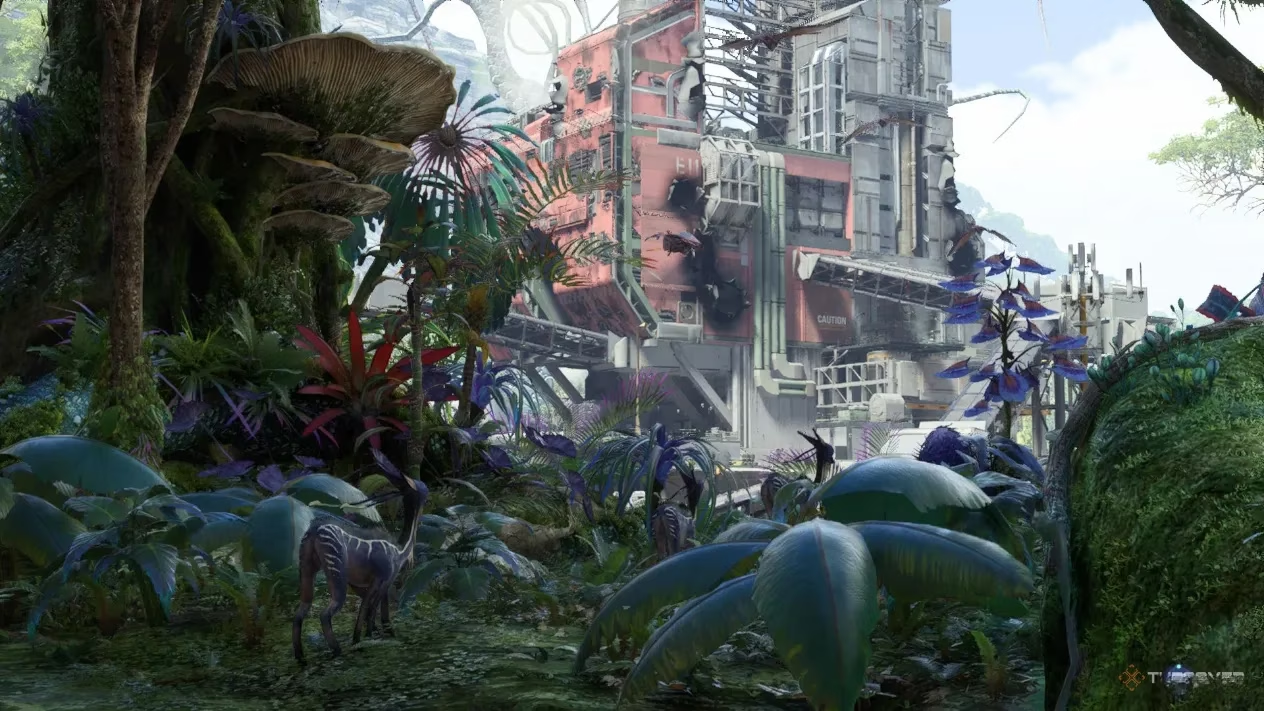
A central gameplay loop involves sabotaging RDA outposts to halt pollution and allow nature to reclaim the land. While the visual transformation of these areas provides satisfying feedback, the speed of ecological recovery stretches believability. Players witness cutscenes showing wildlife returning to previously contaminated areas within what appears to be minutes of the RDA's departure. This rapid regeneration, while narratively satisfying, contradicts established lore about Pandora's ecosystems requiring time to heal from human interference. The game misses an opportunity to showcase gradual environmental recovery through changing visual states over longer gameplay periods, which would have reinforced the themes of patience and natural cycles central to Na'vi philosophy.
Timeless NPC Waiting
NPCs throughout the Western Frontier exhibit infinite patience, waiting indefinitely for the player's return regardless of narrative urgency. Characters with time-sensitive requests will stand in the same location for days, weeks, or even months of in-game time without progressing their own stories or acknowledging the passage of time. This classic video game convention feels particularly incongruous in a world where the narrative emphasizes the urgent threat posed by the RDA's expanding operations. The disconnect becomes especially noticeable when players complete extensive side activities while NPCs with supposedly critical needs wait without comment or consequence.
Changing Ikran Appearance
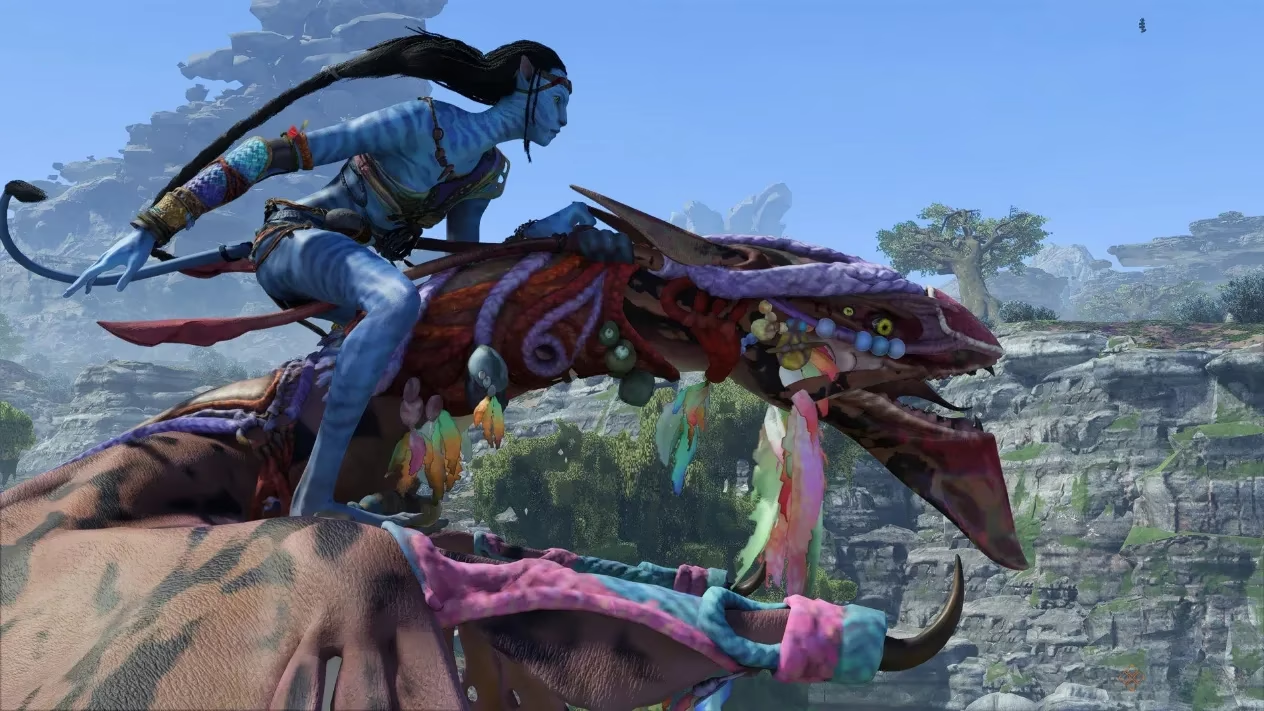
The sacred bond between Na'vi and their ikran represents one of the most spiritually significant relationships in Pandoran culture, yet the game allows players to alter their ikran's appearance at will. While customization options encourage engagement with the game's collection systems, the ability to completely change an ikran's colors and patterns contradicts the established permanence of these bonds. In Na'vi tradition, the connection with one's ikran is lifelong and unique, making the cosmetic alteration feature feel like a gameplay concession that undermines cultural authenticity. The system would feel more integrated if appearance changes reflected natural maturation or environmental influences rather than instantaneous cosmetic swaps.
Unnoticed Character Transformation
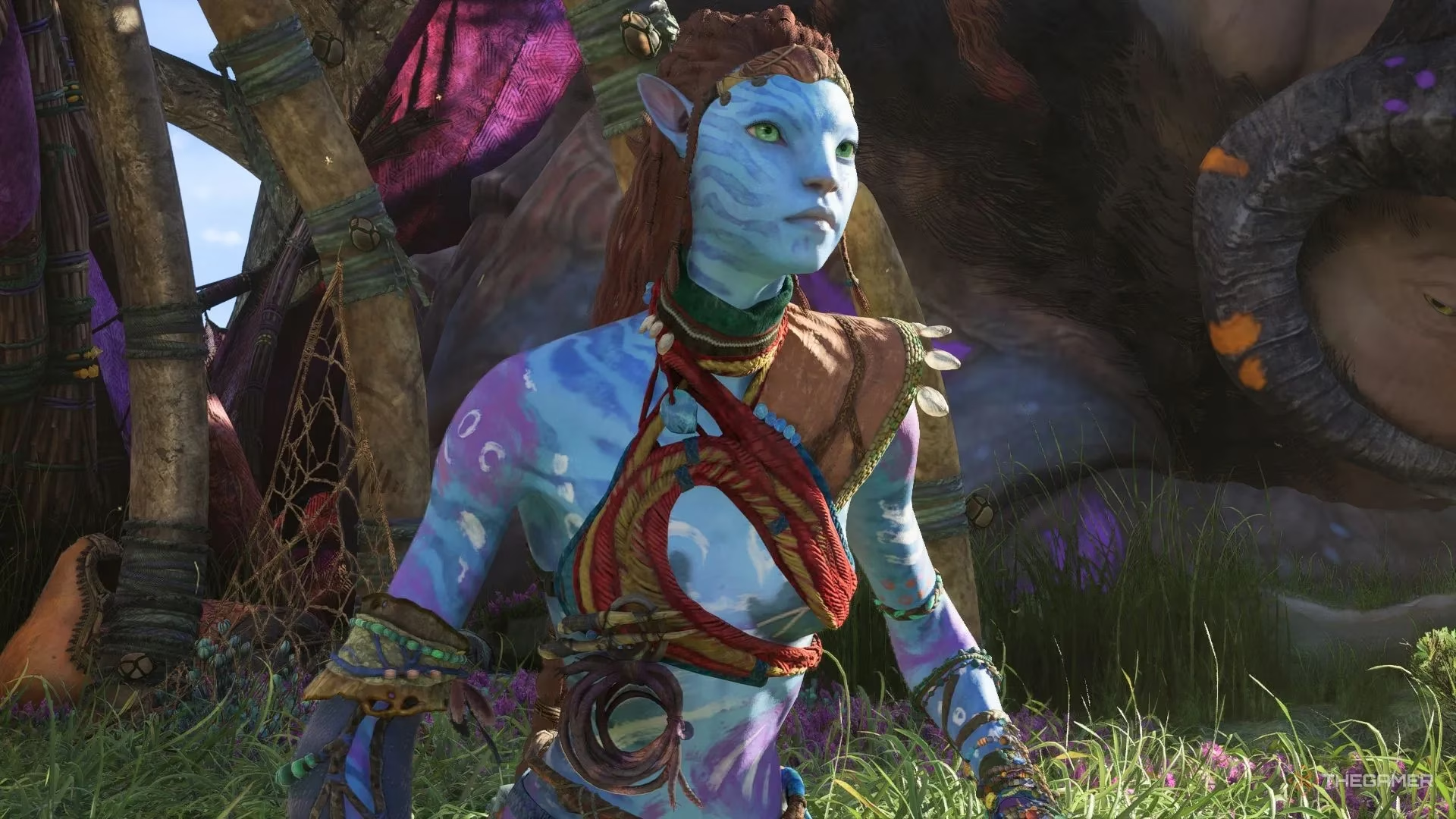
Similarly, players can completely alter their character's physical appearance, voice, and body type at any point without any narrative acknowledgment. While character customization represents a valuable player freedom, the complete absence of reaction from other characters creates a strange dissonance. A Sarentu clan member could transform to resemble a Zeswa or Kame'tire Na'vi, and their closest companions would continue interactions without comment. This becomes particularly noticeable during emotional story moments where character relationships should feel authentic and responsive to identity. The first-person perspective somewhat mitigates this issue, but it remains an immersion-breaking element that separates gameplay convenience from narrative coherence.
No Gear Economy
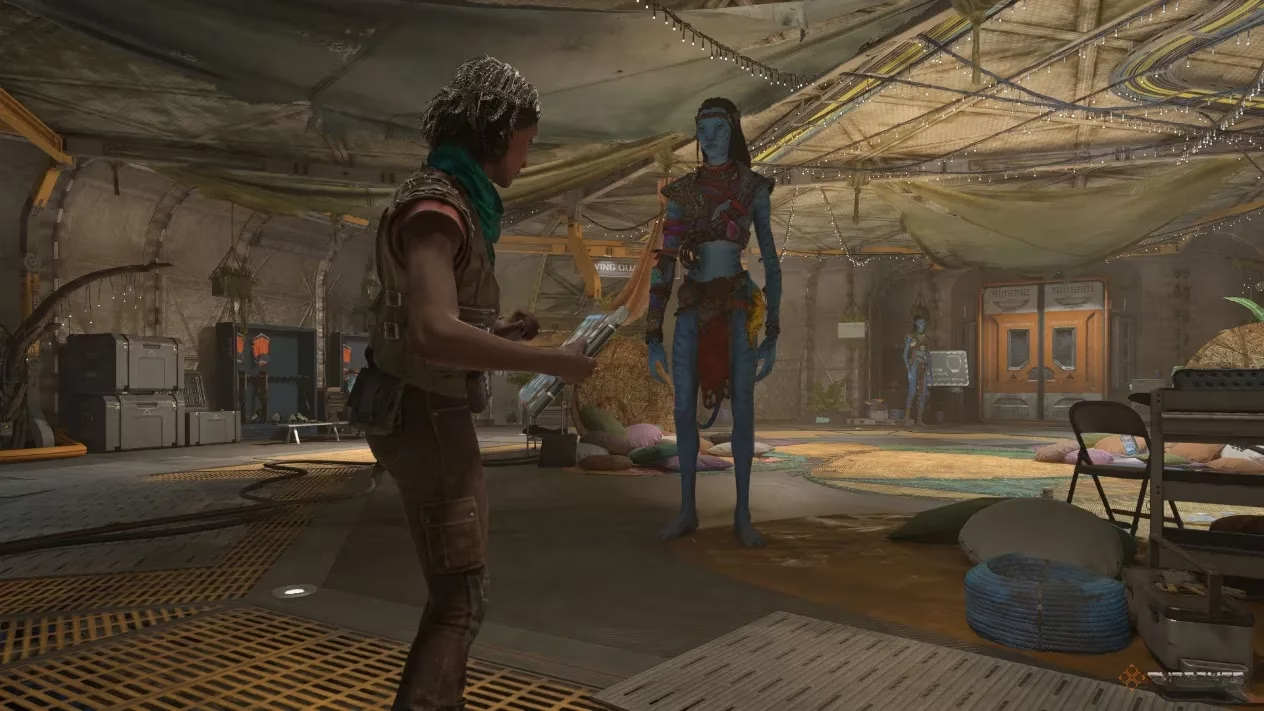
The game's economy presents another puzzling limitation: the complete inability to sell or trade old gear. As players progress, they accumulate outdated weapons, clothing, and tools with no meaningful disposal options beyond donation or discarding. This restriction feels particularly artificial in a survival context where resource management and trade would naturally occur among clans united against a common threat. The narrative emphasizes inter-clan cooperation and shared struggle, yet provides no systems for exchanging equipment that could benefit different communities. This missed opportunity for economic gameplay undermines the world-building that suggests Na'vi societies engage in complex material exchanges and resource sharing.
Solitary Struggle in a Collective Narrative
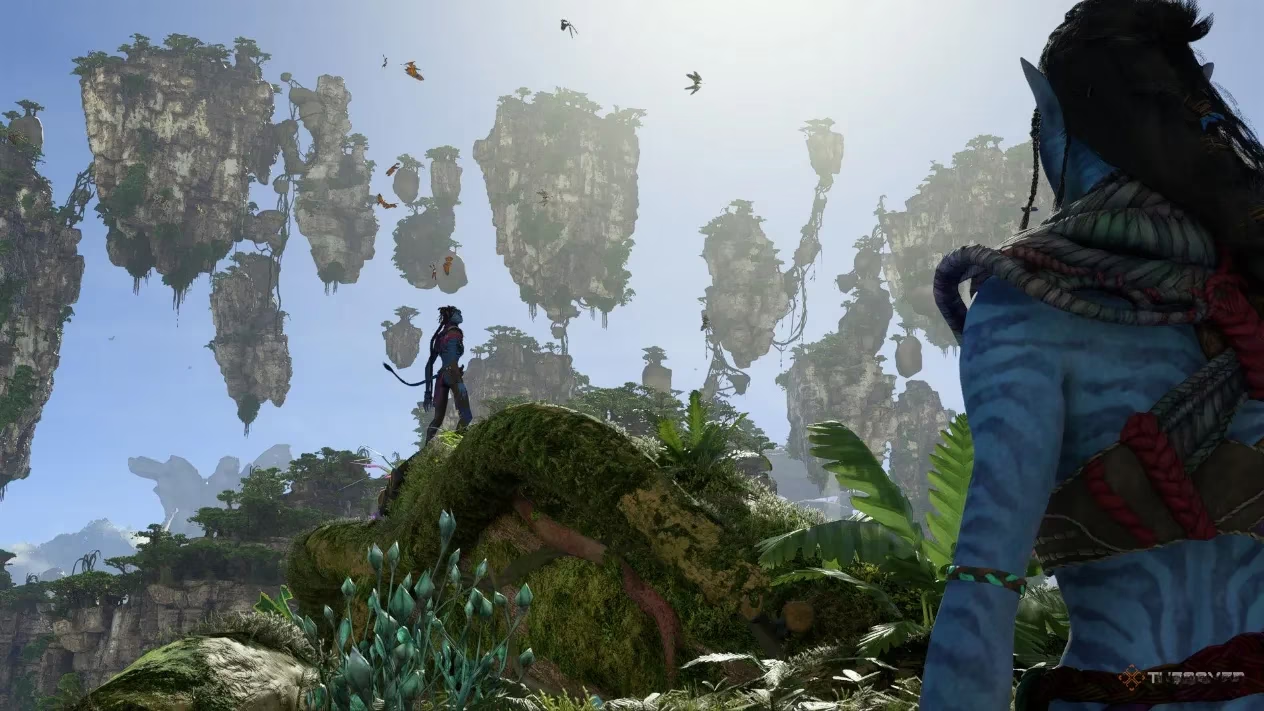
Perhaps the most significant immersion-breaking element is the contradiction between the game's narrative about clan unity and the actual gameplay experience of solitary combat. Despite repeatedly emphasizing the need for collective action against the RDA, players spend most of the game fighting alone. Other clans offer assistance primarily through cutscenes and off-screen mentions, with minimal actual participation in battles or missions. This creates a strange disconnect where the story tells of united resistance while gameplay delivers isolated conflict. The absence of NPC allies during combat feels particularly noticeable during large-scale assaults on RDA facilities, where the presence of even a few clan warriors would reinforce the narrative's themes of solidarity and shared purpose.
Conclusion: Balancing Gameplay and Immersion
Avatar: Frontiers of Pandora succeeds in creating a visually stunning and emotionally engaging world that captures the spirit of the Avatar universe. However, these immersion-breaking elements reveal the tension between gameplay convenience and narrative consistency. Many of these issues stem from common video game conventions that, while functional from a design perspective, clash with the richly detailed lore and cultural specificity of the Pandoran setting. As players navigate the Western Frontier, they must continually reconcile the game's breathtaking environmental storytelling with mechanics that occasionally remind them they're playing a video game rather than living a Na'vi's experience. Future iterations or updates could address these inconsistencies by better integrating gameplay systems with established lore, creating a more seamless and believable experience that fully honors the depth of the Avatar universe.