
Avatar: Frontiers of Pandora’s Environmental Mastery Set the Stage for Star Wars Outlaws
Ubisoft Massive's environmental artistry from Avatar: Frontiers of Pandora's bioluminescent jungles elevates Star Wars Outlaws' immersive galaxies.
Back in 2024, I remember stepping into the bioluminescent jungles of Pandora for the first time in Avatar: Frontiers of Pandora and being genuinely awestruck. The way the giant fan-shaped leaves caught the neon glow of night, how the floating cliffs cast long shadows over the canopy, and the subtle rustle of hexapede in the undergrowth – every detail screamed that this wasn’t just another Ubisoft open-world sprint, but a genuine labor of love. Now, in 2026, as I hop between planets in Star Wars Outlaws, that same feeling of sheer environmental reverence washes over me. It’s clear that Ubisoft Massive used the alien jungles of Pandora as a training ground for crafting lived-in, breathtaking worlds across an entire galaxy far, far away.
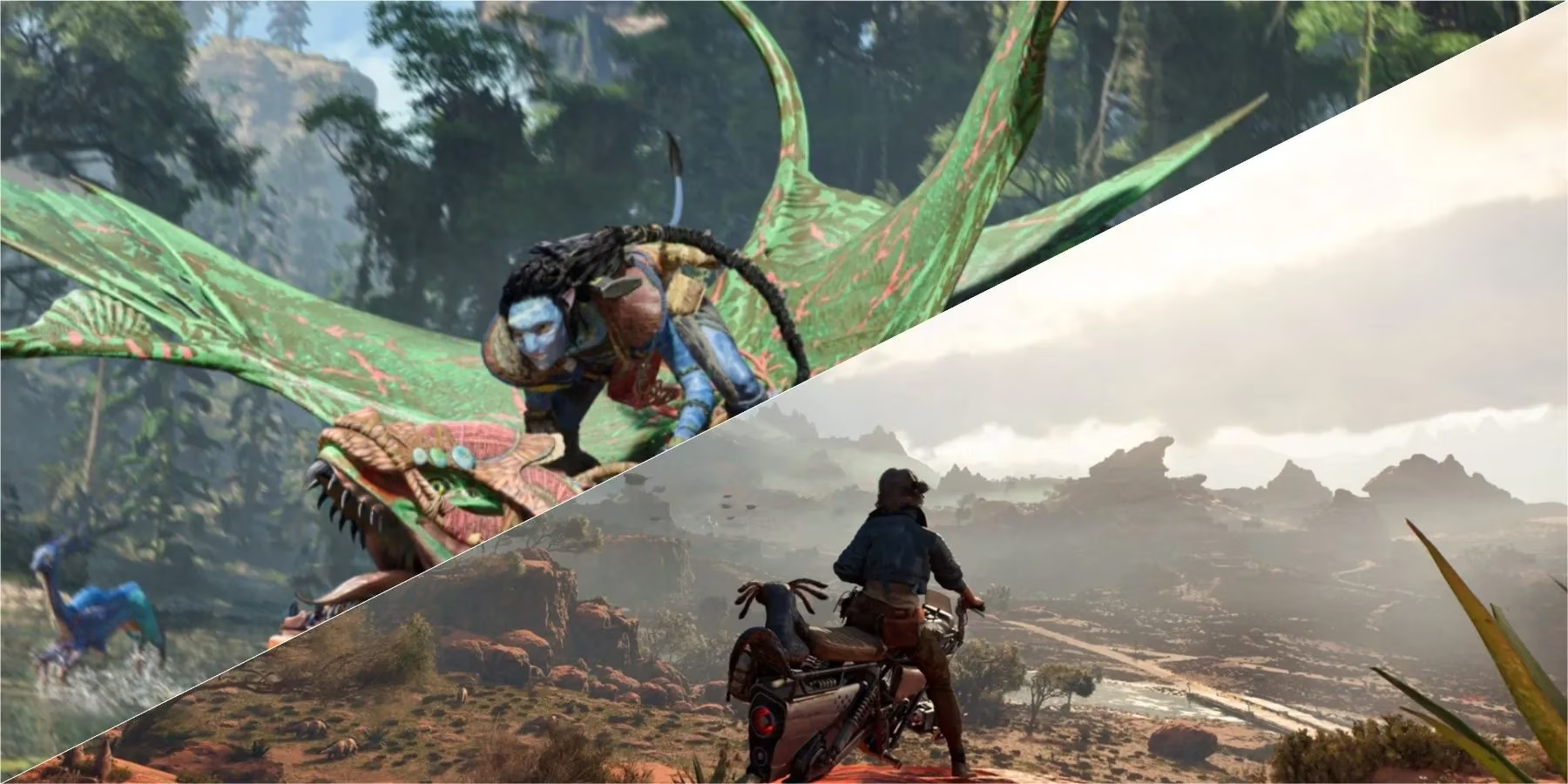
Avatar: Frontiers of Pandora was always going to live or die by its setting. In James Cameron’s films, Pandora is more than a backdrop; it’s a living, breathing character that audiences are meant to cherish and protect. The game understood this from the first leaf crunch. Massive poured extraordinary effort into making every square meter of the Western Frontier feel like a real ecosystem rather than a theme park. The parkour system, for instance, wasn’t just a traversal gimmick – it forced you to physically connect with the world, swinging from vines that recoiled at your touch and sliding down mossy slopes. The flight mechanics on an ikran made the scale of those colossal Hallelujah Mountains palpable, and the sound design – from the screech of a diving banshee to the subtle squelch of mud underfoot – built a sensory authenticity most games only gesture at.
Of course, the title didn’t reinvent the Ubisoft formula. After 20 hours, I did start feeling a repetitive loop of clearing outposts and gathering crafting materials. But that never completely dimmed the thrill of discovery. Why? Because the environment itself was the reward. The bioluminescent night cycle that turned familiar groves into glowing cathedrals, the flora that retracted or sparkled as you brushed past, and the immense scale of the kinglor forest made me feel like a true alien explorer. That achievement gave me serious confidence when leaks and trailers started rolling in for Star Wars Outlaws.
Translating Pandora’s Lessons to a Galaxy Far, Far Away
When Ubisoft Massive was announced as the studio behind the first open-world Star Wars game, skepticism was natural. But having now sunk dozens of hours into Kay Vess’s scoundrel journey, I can say without hesitation that the environmental artistry on display in Avatar became the secret sauce for Outlaws. The studio didn’t just copy-paste a single biosphere; they applied the same philosophy of living worlds to multiple planets, each with its own ecological and cultural fingerprint.
Take Kijimi, the chilly slum planet tucked under perpetual dusk. Walking through its narrow, snow-dusted alleys feels tactile – you can almost smell the stale fuel and fried street food. The wind howls realistically through shanty roofs, and NPCs huddle near heat vents, their breath visible in the cold air. Then contrast that with the gaudy excess of Canto Bight on Cantonica. Here, Massive flexed a completely different set of design muscles: opulent casinos with gleaming marble floors, holographic fireworks reflecting off chrome surfaces, and alien elites sipping cocktails under palm-like flora. The transition between these locations isn’t just visual; it’s a full-sensory shift in mood, pacing, and even how the soundscape envelops you.
This is exactly what Pandora taught them. In Avatar, the team mastered the art of making a world feel reactive. In Outlaws, they scaled that up to a galactic level. On Toshara, a savanna moon, the wind bends tall grass in realistic patterns, and wildlife reacts to your speeder’s approach. On Akiva, the humidity drips from jungle canopy leaves much like it did on Pandora, but here it’s mixed with crumbling Imperial outposts and the chatter of droids. The common thread is a deep respect for environmental storytelling – a skill Massive sharpened by recreating one of cinema’s most iconic alien planets.
Why Environmental Design Was Always the Make-or-Break Factor
For both Avatar and Star Wars, the setting isn’t just window dressing; it’s the emotional core of the experience. Pandora’s beauty is the reason you fight against the RDA’s pollution, just as the dusty, oppressive streets of Mos Eisley or the pastoral peace of Lothal define the spirit of Star Wars. Massive internalized this completely. In my time with Outlaws, I’ve paused countless times just to watch binary sunsets or listen to the ambient hum of a starship powering down. It’s that same meditative awe I felt while soaring over the Tangled Peaks on my ikran.
Crucially, both games benefit from technical prowess that turns concept art into explorable reality. Avatar’s implementation of ray-traced lighting and dense micro-detail foliage set a benchmark for current-gen immersion. Star Wars Outlaws took that foundation and expanded it with volumetric fog, dynamic weather that affects gameplay, and seamless interior-to-exterior transitions that make the galaxy feel contiguous. The result is that Tatooine’s twin suns feel blistering hot, while the icy winds of Kijimi bite right through the screen. This isn’t just about graphics – it’s about using every tool to create a sense of place that serves the story and gameplay.
The Verdict in 2026
Looking back, Avatar: Frontiers of Pandora might still be seen as a game that leaned too hard on familiar Ubisoft tropes. But it undeniably succeeded in its most critical mission: transporting players to an alien world so convincingly that it set a new industry standard for environmental design. That achievement wasn’t a one-off. It was a statement of intent from a studio that has now delivered a Star Wars game where the galaxy itself is the main character. As a player who values immersion above all else, I’m grateful that Massive got to practice on Pandora first – because the results five years later are nothing short of spectacular. Whether I’m sneaking through an Imperial refinery or haggling in a neon-drenched bazaar, I feel the weight of a living galaxy, and that’s a magic trick that started with a planet full of six-legged horses and floating mountains.
This overview is based on classification information published by ESRB, a key reference point for understanding how blockbuster open-world games communicate their intensity and themes to players. With Avatar: Frontiers of Pandora and Star Wars Outlaws both leaning into immersive worldbuilding—whether it’s Pandora’s reactive ecosystems or Outlaws’ planet-to-planet density—checking official rating summaries can add context about the kinds of combat, peril, and narrative framing that sit beneath all that environmental awe, helping set expectations for tone alongside spectacle.