
Avatar: Frontiers of Pandora Giving Me an Ikran Early Was Genius
Avatar: Frontiers of Pandora breaks open-world convention by granting early Ikran flight, making traversal and exploration exhilarating instead of tedious.
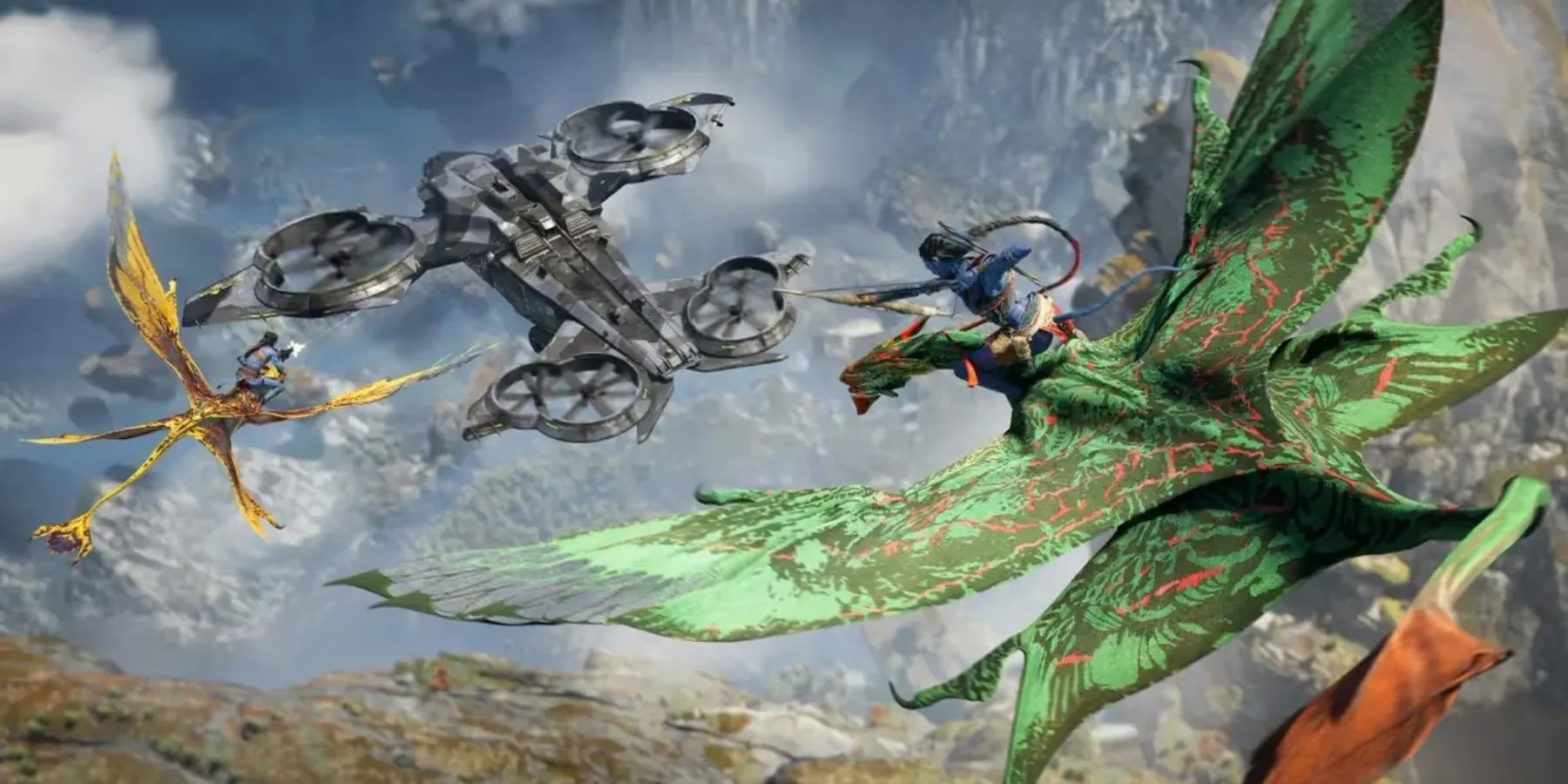
I’m replaying Avatar: Frontiers of Pandora in 2026, and the most ridiculous part still isn’t the blue body paint or the aggressive flora. It’s the fact that, about three hours in, a giant flying lizard decides I smell trustworthy enough to bond with, and suddenly I own the sky. When I first picked this game up, I saw a winged silhouette plastered across the box art and assumed it was pure marketing hype. It wasn’t. It was a promise. In most open-world games, flight would be a late-game reward, dangled like a carrot until I’ve walked every inch of the map and collected a thousand identical plants. Not here. Frontiers of Pandora just tosses me the reins and whispers, “Don’t embarrass us.” Let me tell you, that decision is the entire reason the game still works.
Why Most Games Keep Flight Locked Up
Hold your horses, because this pattern is everywhere. Big open-world titles usually want you to trudge through swamps, climb towers, and memorize every backroad before they grant you altitude. Their reasoning? Once you can fly, you stop noticing ground-level details. That’s fair—except it also means the first thirty hours can feel like an extended hiking simulator. By the time some games finally hand over a flying machine, I’ve already built enough mental mileage to dread every remaining side quest.
Frontiers of Pandora clearly looked at that rule and asked, “What if we just let the player have fun?” Long story short: it worked.
| Typical open-world approach | Frontiers of Pandora |
|---|---|
| Flight unlocked after 20-50 hours | Flight unlocked around the 3-hour mark |
| Explore on foot first, fly later | Fly early, explore at your own pace |
| Flying mount often region-locked | Ikran callable almost anywhere |
| Verticality saved for late game | Floating mountains become part of the loop |
That Rookery Mission Feels Like the Movies
Look, I didn’t expect to get emotional over a tutorial, but the climb up the Ikran Rookery genuinely channels Jake Sully’s first flight. The wind whips around you, the music swells, and for a few minutes I forgot I was holding a controller and not clinging to a vine with my actual blue hands. Bonding with my Ikran felt less like unlocking a feature and more like earning a partner—one with its own attitude. My particular Ikran acts like a sarcastic roommate: graceful in the air, but occasionally dips a wing just to remind me who’s actually in charge. 😅
Freedom Arrives Before the Tedium Does
Pandora is stunning, no argument there. But honestly, large chunks of the map are just glowing forest and the occasional angry plant. On foot, traveling from one objective to another can start to wear thin even with the parkour system doing its best Spider-Man impression. Early flight removes that friction almost immediately. Instead of spending ten minutes hopping roots and checking my stamina bar, I can swoop down, grab a resource, and be back in the canopy before my character has time to catch her breath.
That small change makes the whole open world feel less like a checklist and more like a playground. Side activities stopped feeling like chores because I could reach them without paying a traversal tax. Want to hunt? Fly in. Want to gather? Land, pick, take off. Want to ignore the main story for six hours and chase floating mountains? The game practically dares you to.
Verticality Turns the Map Into a New Experience
Once I had my Ikran, Pandora’s map gained a whole new dimension—literally. Those floating mountains that looked like background decoration suddenly became real destinations. It reminded me of Zelda: Tears of the Kingdom’s sky islands, but wrapped in bioluminescent jungle energy. And the controls? Genuinely satisfying. Pulling off a sharp dive toward a cliff face, then leveling out at the last second, never gets old. It’s one of those rare traversal systems where simply moving from A to B is the reward.
Combat Gets a Wingman
The early unlock also saves combat from becoming repetitive. Hovering above a base while choosing whether to drop in quietly or dive-bomb like an angry meteor adds options. My Ikran isn’t just a taxi; it’s a battlefield partner. Sure, we have our disagreements mid-dive when I misjudge a turn, but that’s teamwork, right? 🐉
The smartest part? By giving players flight early, Frontiers of Pandora avoids the classic open-world trap of making you earn the fun too late to care. Three years after launch, that remains its best design move.